The Barcelona Flower
How a humble paving tile became the symbol of a city, a masterpiece of design, and a piece of history you can finally wear.
Breaking the Walls
For centuries, Barcelona was suffocated by medieval walls. In 1854, they were finally demolished to let the city breathe. Engineer Ildefons Cerdà envisioned a utopian grid—the Eixample—where sunlight and ventilation were rights, not luxuries.
But this massive expansion created a new problem. The rapid construction outpaced infrastructure, leaving the ground level a disaster zone.
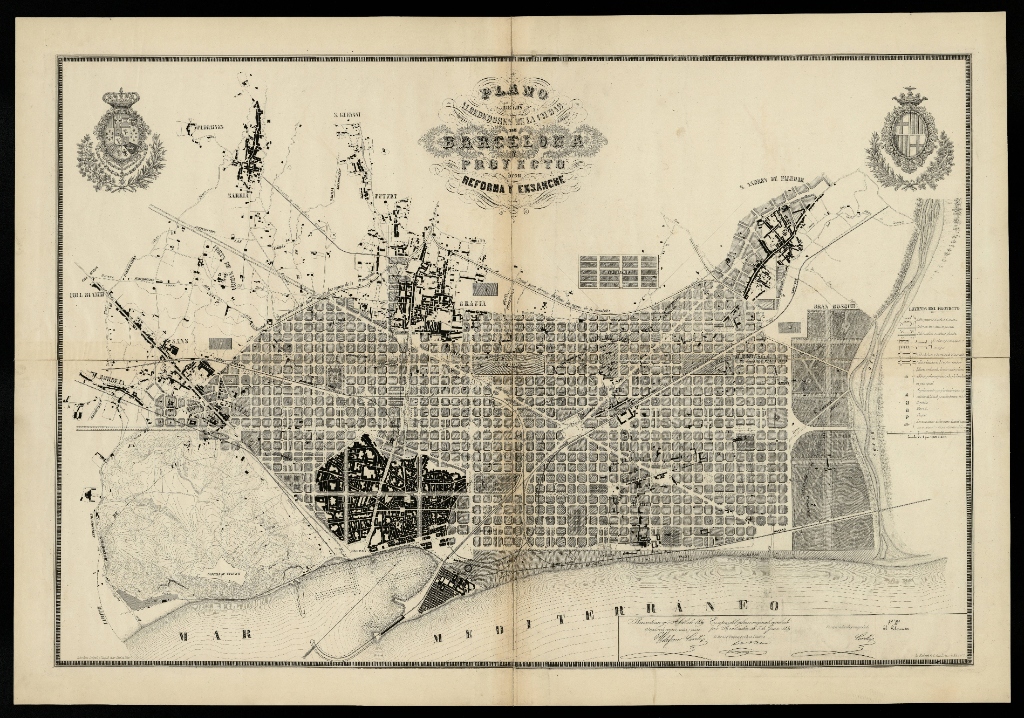
Ildefons Cerdà's 1859 expansion plan following the demolition of the walls.
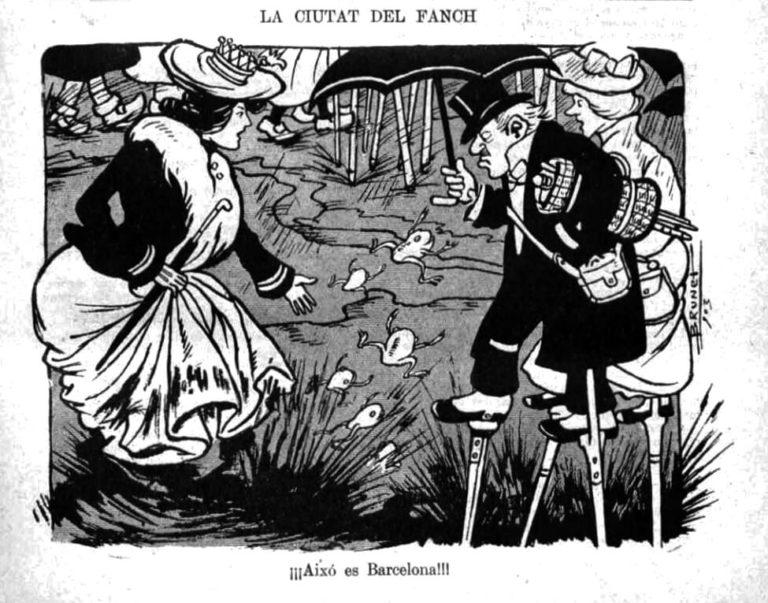
"Can Fanga" mocking the muddy streets, c. 1900
The House of Mud
Barcelona was breathtaking from the balcony up, but a swamp at street level. Paving couldn't keep up with the expansion. The rains turned the streets into notorious sludge, earning the city the satirical nickname "Can Fanga" (The House of Mud).
The city needed a solution that was durable enough for traffic, yet beautiful enough for its Modernist ambitions. They needed a skin for the new metropolis.
The Birth of a Symbol
In 1906, the City Council launched a massive tender. The winner was Casa Escofet, the company that would pave the city for the next century.
They introduced the Panot: a 20x20cm hydraulic cement tile. Of the five approved designs, one stood out. A stylized, four-petaled rose that brought the beauty of nature to the industrial street. This design would become known to history as The Barcelona Flower.
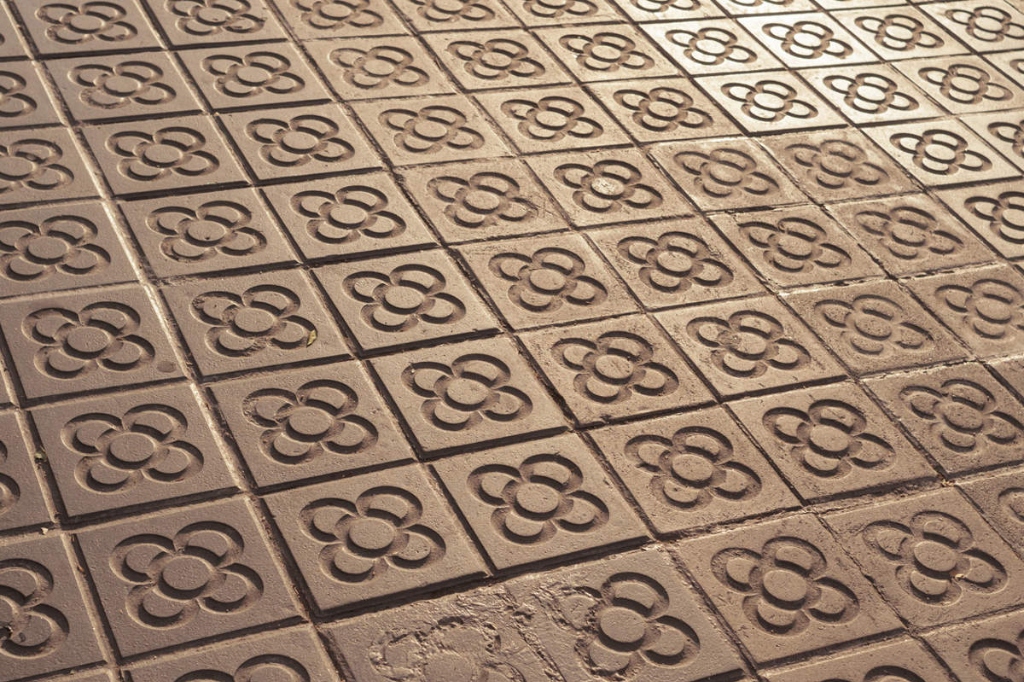
The iconic Flor de Barcelona tiles paving the Eixample today.
The Architect's Mark
Legend attributes the design to the great architect Josep Puig i Cadafalch. While he designed a similar stone flower for the vestibule of Casa Amatller in 1900, the street tile is its industrial cousin.
It was the democratization of luxury. The wealthy walked on stone flowers inside their palaces; thanks to The Barcelona Flower, the people walked on art outside.
Wear the Symbol
Today, the Flor de Barcelona is the city's most enduring icon. With Panot Caps, you don't just visit Barcelona—you carry its soul with you.
Shop the Collection